
2D AND 3D GEOMETRIES
Wire forms.
We manufacture 2D and 3D wire forms. Wire size, radii, support points and interfaces with other parts help define how to produce and verify your geometry.
Explore technical information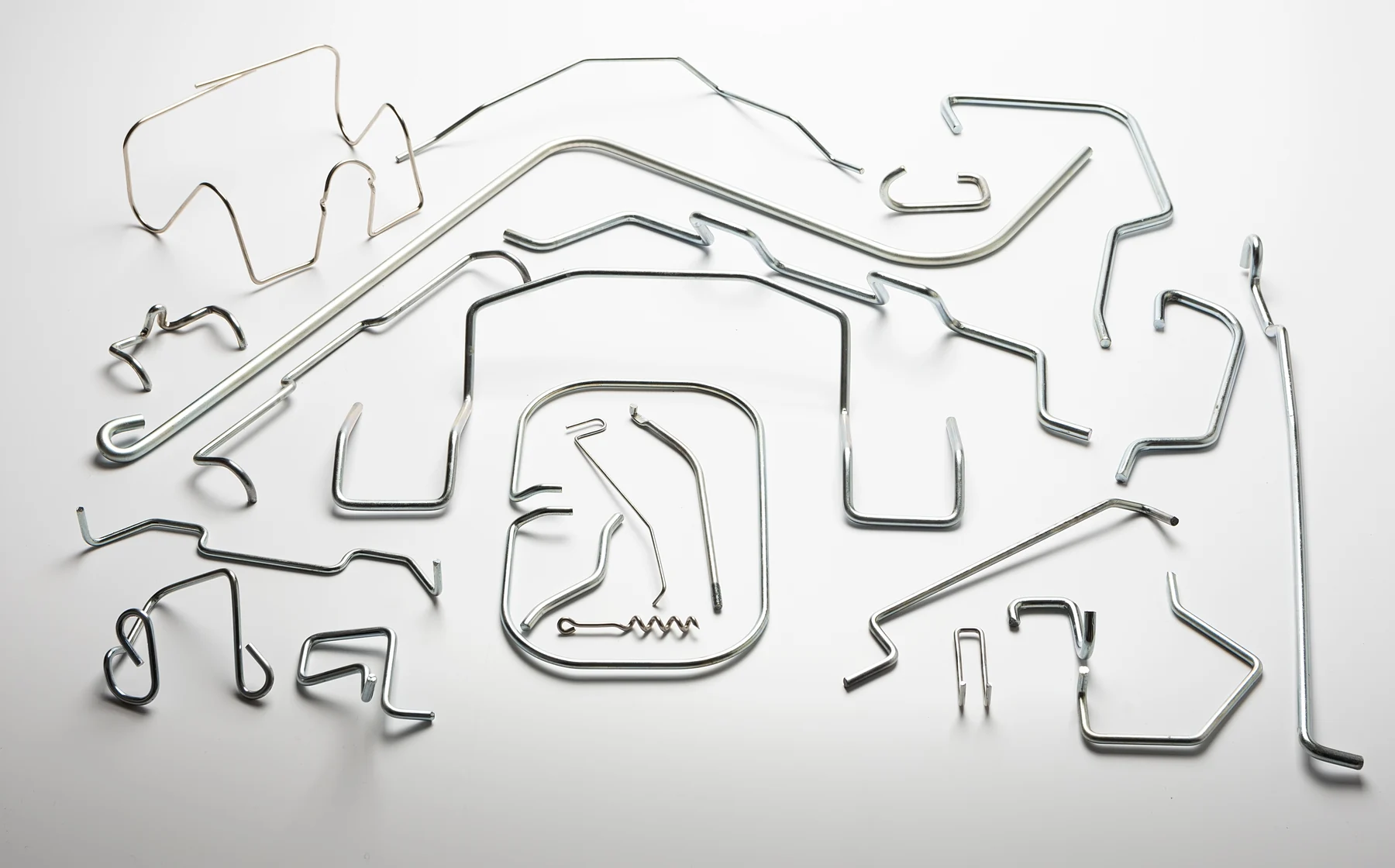 Enlarge image
What it needs to retain, support or position.
Contact and support points
Clearance and interfaces
Functional dimensions
Additional operations
Read the assessment criteria
Clips, retainers and rods serve different functions. Identify contact points with other parts and areas that need clearance. These references help distinguish functional dimensions from other geometry measurements.
Assess cross-section and geometry together.
Wire diameter or cross-section
Part radii and dimensions
Assessment against specification
Read the assessment criteria
Wire diameter is one of the part’s parameters. Its combination with material, radii, dimensions, tolerances and volume requires technical assessment.
Geometry that can be verified.
Measurement and installation references
Features and acceptance criteria
Included operations and finish
Samples and expected quantities
Read the assessment criteria
The drawing or sample needs to identify measurement references and installation conditions. The review determines the operations and preparation the shape needs, how to check functional features and which finish the proposal includes.
YOUR PROJECT
From your specification to a proposal.
Drawing and revision, material and quantities are the starting point for reviewing manufacture, inspection and supply.